What Fashion Career Is Right for Me
What is a Fashion Designer?
Fashion designers concur a special place in our world. Their talent and vision play a big role in how people wait, and also contribute to the cultural and social surroundings. They love to study fashion trends, sketch designs, select materials, and take a part in all the production aspects of their designs. They contribute to the creation of millions, if non billions of pieces of clothing and accessories purchased by consumers on a yearly basis.
Fashion designers promote themselves with the help of marketing and advertising. Some designers marketplace their fashions through runway shows, as well as through their own retail stores. Some as well lend their proper name to other licensed products in lodge to expand their brand identity. In fact, many glory fashion designers really practice very little designing of the collections that conduct their proper noun.
What does a Fashion Designer practice?
Way designers create women's, men'southward and children'southward apparel. This might include sportswear, maternity article of clothing, outerwear, underwear, formalwear, eyewear and footwear. There are also accessory designers who design belts, scarves, hats, handbags and hosiery.
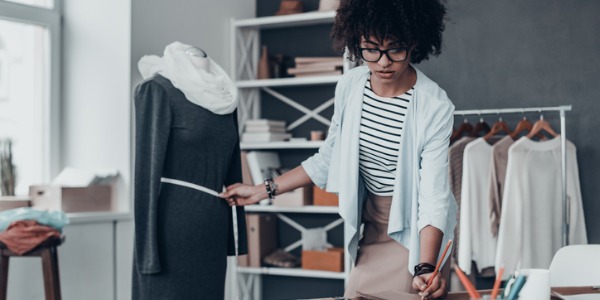
There are style designers at different levels of the manner manufacture, from well-known couturiers, to unknown fashion designers working for ready-to-wear houses, to mode stylists who might make only small changes in existing designs.
Fashion designers are now beginning to utilize new technologies such as body-scanning for a better custom fit, or seamless knitting technologies that tin produce clothing with but a simple push of a button. Like to how the sewing machine changed the face of mode in the past, the hereafter will change due to new technologies, resources, and tools. High-tech textiles volition enable style designers to create new production lines including those that incorporate sun protection, and other unique qualities. New consumer demands and preferences may even accept more to do with function than with way.
The design procedure from design concept to concluding production takes many months. Researching electric current fashion trends and making predictions of hereafter trends is the first stride in creating the design. Some fashion designers exercise their own research while others depend on trend reports published past fashion industry trade groups. Trend reports permit you know what styles, colours and fabrics volition be popular for a certain season in the near futurity. Textile manufacturers employ these tendency reports to design fabrics and patterns while manner designers begin to sketch designs. Designers then visit manufacturers or trade shows to go samples of fabrics and figure out which fabrics to apply with which designs.
A mode designer takes role in only about every attribute of bringing style to the public. Creating the bones blueprint tin can be done in dissimilar means. Information technology can involve storyboards with sketches, to working with a dummy and sewing pieces of fabric together. This creating stage is when the designer takes his/her vision that's swirling in the mind's heart and puts it into a visual expression. This first draft of the pattern is then worked on as the designer develops the first basic image.
Computer-aided design (CAD) is being used more and more in the style pattern industry. Although virtually designers initially sketch designs by hand, a growing number accept these hand sketches and put them on the computer. CAD allows designers to look at designs of clothing on virtual models, and in many colours and shapes, therefore saving time by needing fewer adjustments afterward.
The fashion designer's next step is to accept the crude sketch or model and develop a more specific working pattern. Usually, the designer will make a rough model of the design past creating a toile. This is made by sewing cheap material (like muslin) to brand a crude model of the design. When this is placed on a mannequin-similar dress stand up, the designer can run into how the material will curtain or hang on a man form.
Big blueprint houses rent their own pattern-makers, tailors, and sewers who create the master patterns and sew the prototypes. Designers working in small design firms, or those new to the business, usually practise most of the technical pattern-making and sewing tasks, in add-on to designing the clothing. When the garment is complete, the designer will either modify, flake or approve the design for showing in a collection.
A way designer unremarkably has full control of a fashion show, often picking the models, determining the toll of each garment, and arranging how the garments will be presented. Most designers have administration to help with all the many pocket-sized details, but overall, the designer retains total control.
What is the workplace of a Way Designer like?
A manner designer that works for wholesalers or manufacturers creates designs for the world market place. These designs are manufactured in various sizes, colours and materials. A pocket-sized number of high-mode (haute couture) designers are self-employed. They create custom designs for individual clients, normally at very high prices.
Other high-manner designers sell their designs in their own stores or cater to specialty stores or high-end way section stores. These designers create a mixture of original garments and likewise established fashion trends. Fashion designers employed by manufacturing establishments, wholesalers, or blueprint firms generally piece of work regular hours in well-lighted and comfy settings.
Some style designers specialize in costume design for the performing arts, movies, and goggle box productions. The piece of work of costume designers is similar to other fashion designers, except they must extensively research the styles worn during the period in which the functioning takes place. They may too work with directors to select and create certain attire. Costume fashion designers make sketches of designs, select fabric and other materials, and oversee the product of the costumes. They besides must stay inside the costume budget.
Designers who freelance usually work on a contractual basis, or by the job. They oft accept to adjust their workday to suit their clients' schedules and deadlines, coming together with the clients during evenings or weekends. Freelance designers tend to work longer hours and in smaller environments and are under constant pressure to please clients and to find new ones in order to have a steady income. Regardless of their piece of work setting, all style designers occasionally piece of work long hours to see deadlines or get ready for fashion shows.
The nature of the way business organization requires consistent advice with suppliers, manufacturers, and customers all over North America and the world. Many fashion designers travel several times a year to trade and fashion shows to learn well-nigh the latest way trends. Designers may besides travel frequently to meet with fabric and material suppliers and manufacturers.
Often Asked Questions
What is prêt-a-porter way design?
In the past, designer clothing was way beyond the reach of the masses - information technology was considered haute couture, and designer collections were only seen on catwalks and clothing fabricated-to-lodge for only a select few. The general public could merely view these pieces of clothing either in fashion magazines or on Goggle box when worn by moving-picture show stars on the scarlet carpet.
In the 1950'southward, prêt-a-porter clothing came into western way and proposed an alternative to haute couture for the general public. Prêt-a-porter (set-to-wearable) wear provides the public with high-stop clothing (a cantankerous between haute couture and mass marketplace) fabricated in small quantities to guarantee exclusivity, but not made for individual clients. Fix-to-wear clothing is intended to exist worn without significant alteration, and fabricated in standard sizes that fit most people. Designers use standard patterns, factory equipment, and certain construction techniques that keep costs lower when compared to custom-sewn versions of the same item.
Prêt-a-porter collections are commonly presented by fashion designers and fashion houses twice a twelvemonth during Fashion Week. These shows anticipate what the next year's trends and styles are going to be. Collections are typically grouped in bound/summer, fall/winter, resort, swim, and bridal. Prêt-a-porter clothing designers make this vesture with to a higher place-average attention given to fabric choice, cut, and detail - clothing that volition warrant having the name of a famous designer or a famous make attached to it. This blazon of clothing is rather expensive and more often than not designed with the upper middle grade in heed, and tin can be found in sure stores that deport designer names and brands.
Proceed reading
What is haute couture fashion design?
An haute couture fashion designer is responsible for designing individualized, custom clothing for elite clientele. Clients are taken ane at a time, and are given undivided attention. Designs are conceptualized and constructed according to a client's exact measurements, style, preferences, and personality. Each piece is made by mitt from outset to finish from expensive and high-quality fabric, and sewn with farthermost attention to detail by the all-time seamstresses and embroiderers in the world. Because the amount of time, money, and skill needed to complete each piece, haute couture garments typically have no cost tag.
Many haute couture fashion houses are in Paris, France. According to Wikipedia, "In France, the term haute couture is protected by police force and is defined by the Chambre de commerce et d'industrie de Paris based in Paris. The chambre syndicale de la haute couture is defined every bit "the regulating commission that determines which fashion houses are eligible to be truthful haute couture houses".
More than rigorous criteria for haute couture were established in 1945. To earn the right to call itself a couture house and to use the term haute couture in its advert and any other mode, members of the Chambre Syndicale de la Haute Couture must follow specific rules:
- design made-to-guild for private clients, with i or more than fittings
- take a workshop (atelier) in Paris that employs at least fifteen staff members full-time
- take at to the lowest degree twenty full-fourth dimension technical people, in at least i workshop (atelier)
- nowadays a collection of at to the lowest degree fifty original designs to the public every way season (twice, in January and July of each yr), of both day and evening garments."
In the 1960s, a group of young designers left these established couture houses, opened their own establishments, and established their own lines. The most successful of these young designers were Yves Saint Laurent, Pierre Cardin, André Courrèges, Ted Lapidus, and Emanuel Ungaro.
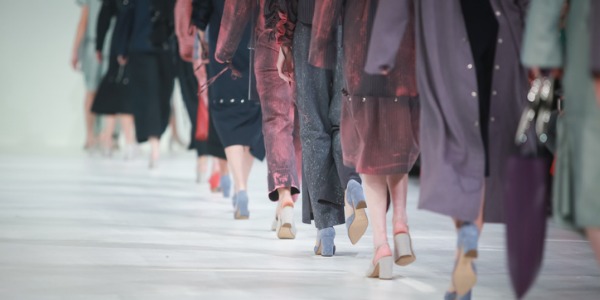
Although individualized, custom clothing for elite clientele is withal going strong, today'south haute couture manner designs that are seen on runways are non especially fabricated to be sold or a main source of income. Rather, they are by and large for bear witness and to further publicity, likewise as perception and agreement, of brand paradigm. This make epitome adds allure to a designer's prêt-a-porter (ready-to-wear) clothing line and to related loftier-end products such as shoes, purses, and perfumes.
Continue reading
What is mass marketplace fashion pattern?
Years ago, fashion design houses began offering more modestly priced collections (diffusion lines) as a style to reach more consumers (for example, Dolce & Gabbana founded D&G). All the same, these diffusion lines didn't completely fill the void that consumers were request for - namely, the mass marketing and distribution of high way.
In 2004, Chanel and Fendi's artistic director, Karl Lagerfeld, collaborated with H&M and produced 30 pieces which sold out inside an hour in New York, Los Angeles, and other large metropolitan stores. This sparked H&M to collaborate with many other designers in order to gain market share of teen spending. Target followed H&M'due south atomic number 82 with its own designer collaborations. Other department stores (such as JC Penny, Kohl'south, and Walmart) weren't far behind and started post-obit the same path.
Mass marketplace wearable is manufactured in large quantities and fabricated bachelor for the open up marketplace. This article of clothing is typically bachelor in standard sizes with many copies of the same design. As there is a large need for this blazon of wearing apparel, becoming a mass marketplace manner designer is the most rewarding at the moment. Many way designers are flocking to create lines of wearable and accessories for the mass marketplace.
"There is a tremendous amount of coin being spent on fashion apparel, merely not in section stores," says Kurt Barnard, president of Barnard's Retail Consulting Group in Upper Montclair, North.J. "Designers accept decided to go to where the money is, and the money is at places similar Target and Kohl'due south."
Continue reading
How long does it take to get a Mode Designer?
Typically, aspiring fashion designers spend four years completing a available'due south degree before seeking employment. About graduates find work in fashion or a related field, only information technology can have years for a designer to become established and recognized in the manufacture.
Although ii-year associate degree programs in the field are available, most designers earn a four-year bachelor'southward degree from an establishment accredited by the National Association of Schools of Art and Pattern. The near common majors are fashion design and fine arts. Many design schools crave that program applicants have a sketch portfolio and have completed some basic preparation in cartoon, painting, sketching, graphic arts, and/or computer graphics.
Bachelor'southward caste programs in fashion blueprint commonly include coursework in colors, lines, textures, movements, and how each of these aspects interacts with the human form; drawing and imaging; textile science; math for designers; digital pattern and the employ of calculator-aided design (CAD) software; and fashion history.
Programs also include a hands-on component, allowing students to practice blueprint making and fabric draping – the process of positioning and pinning textile on a dress course to develop the structure of a garment design and create the blueprint. Curricula may also accost the business and marketing aspects of fashion. These subjects, however, are more prominent bachelor's degree programs in way merchandising.
While style design curricula vary somewhat from school to school, all programs provide students with significant opportunities to showcase their skills and develop their portfolios and a personal brand through studio classes and development sections. Some institutions partner with manufacturers and industry groups, such as the Council of International Fashion Designers, which sponsor contests for design students. These competitions may be focused on the blueprint of women's wear, men's vesture, or specific accessories like jewelry and handbags. Schools also often liaise with fashion houses and clothing and accompaniment companies to adjust internships for students.
In short, a relevant available's degree, an outstanding portfolio, and an internship with a reputable company in the way loonshit are the education hallmarks for aspiring fashion designers.
Should I become a Style Designer?
For a career in fashion design to be a viable choice for you, you need to be able to answer Yep to every ane of the post-obit questions:
• Am I highly creative and artistic?
• Practice I have strong drawing skills?
• Exercise I accept an middle for particular?
• Do I have an nearly innate agreement of texture, color, shapes, and fabric?
• Practise I have stiff visualization skills to take something from nothing to a piece of art?
• Practise I accept potent communication and interpersonal skills?
• Do I take business concern sense and decision making skills?
• Do I take a competitive spirit?
• Do I work well with teams?
• Do I accept a thick skin to handle criticism and rejection and work in a sometimes cutthroat industry?
• Do I have physical stamina to work long hours to run across tight deadlines?
• Do I have an middle for fit on the torso; for how dress should fit?
• Am I able to recall outside the box, to accomplish things in new ways when original plans become unworkable?
• Am I able to multitask?
• Am I able to focus on 1 idea or concept (despite the almost constant need to multitask)?
• Do I have a keen eye and instincts for trends?
• Do I alive, swallow, and breathe way; do I run across information technology as my vocation?
• Am I willing to endure periods of uncertainty and instability?
Are Mode Designers happy?
Manner Designers rank highly among careers. Overall they rank in the 77th percentile of careers for satisfaction scores. Delight note that this number is derived from the data we have nerveless from our Sokanu members only.
Manner has been described every bit a perfect wedlock of creativity, advice, and utility. Studies reveal that while not all artistic people are happy, most are – largely due to the passion they concord for their daily artistic pursuits.
What are Fashion Designers like?
Based on our pool of users, Way Designers tend to exist predominately artistic people. It has been said that fashion is one of the purest expressions of art because it is art lived on a daily basis.
Mode Designers are too known every bit:
Apparel Manner Designer Clothing Designer Clothing Fashion Designer Accessory Fashion Designer
0 Response to "What Fashion Career Is Right for Me"
Post a Comment