Humna Rights Issues Occuring in Fashion Today
Many of the world'southward biggest way brands and retailers are complicit in the forced labour and human rights violations being perpetrated on millions of Uighur people in the Xinjiang region of northwestern Prc, says a coalition of more than than 180 homo rights groups.
There is mounting global outrage over the atrocities beingness committed against the Uighur population in the region, including torture, forced separation and the compulsory sterilisation of Uighur women.
Despite these abuses, the coalition of human being rights groups says many of the world'due south leading article of clothing brands continue to source cotton and yarn produced through a vast state-sponsored system of detention and forced labour involving up to one.8m Uighur and other Turkic and Muslim people in prison house camps, factories, farms and internment camps in Xinjiang. It says that the forced labour system across the region is the largest internment of an ethnic and religious minority since the second globe war.
Global way brands source so extensively from Xinjiang that the coalition estimates it is "well-nigh certain" that as many every bit one in five cotton fiber products sold beyond the world are tainted with forced labour and human being rights violations occurring there.
China is the largest cotton wool producer in the world, with 84% of its cotton coming from the Xinjiang region. Cotton and yarn produced in Xinjiang are used extensively in other primal garment-producing countries such equally Bangladesh, Cambodia and Vietnam. Xinjiang cotton wool and yarn are also used in textiles and home furnishings. This week the New York Times reported that factories in the region were too supplying face masks and other PPE to countries around the world.
The coalition has published an extensive list of brands it claims keep to source from the region, or from factories connected to the forced labour of Uighur people, including Gap, C&A, Adidas, Muji, Tommy Hilfiger and Calvin Klein.
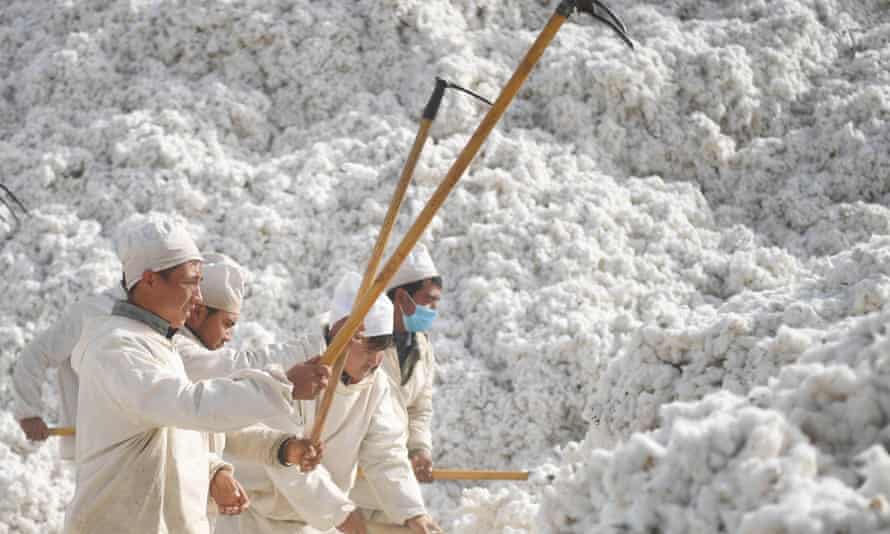
"Virtually the entire [global] apparels industry is tainted past forced Uighur and Turkic Muslim labour," the coalition said in a statement issued today.
The coalition says many more than leading clothing brands also continue to maintain lucrative strategic partnerships with Chinese companies, accepting subsidies from their government to expand cloth production in the region or benefiting from the forced labour of Uighur people transferred from Xinjiang to factories beyond China.
"At that place is a loftier likelihood that every loftier street and luxury make runs the take a chance of beingness linked to what is happening to the Uighur people," says Chloe Cranston, business concern and human rights manager at Anti-Slavery International.
In a call to action, the coalition, which includes more than than 70 Uighur rights groups, anti-slavery organisations and labour rights campaigners, says the global clothes industry must eradicate all products and materials linked to forced labour in Xinjiang within a year.
"Global brands demand to ask themselves how comfortable they are contributing to a genocidal policy against the Uighur people. These companies accept somehow managed to avoid scrutiny for complicity in that very policy – this stops today," said Omer Kanat, executive director of the Uyghur Human Rights Project.
According to the Worker Rights Consortium (WRC), ane of the signatories of the call to activeness, brands have no credible way of proving that their supply bondage from the Xinjiang are free of forced labour.
"Forced labourers in the Uighur region confront barbarous retaliation if they tell the truth about their circumstances. This makes due diligence through labour inspections impossible and virtually guarantees that any brand sourcing from the Uighur region is using forced labour," said Scott Nova, executive director of the WRC.
"An apparel make that claims to know, with confidence, that all the farms and factories it uses in the region are costless of forced labour is either securely contemptuous or misinformed."
In April, the Global Legal Action Network (Glan), a group of human rights lawyers, also provided evidence to HMRC that brands including Muji, Uniqlo, H&M and Ikea were selling products in the UK containing cotton wool and yarn from the Xinjiang region. Glan argued that the UK government should halt sales of products linked to forced labour across the region as it breached several U.k. laws including the 1897 Foreign Fabricated Appurtenances Human activity.
In response, H&M and Ikea said they would stop buying cotton wool from the region. In an updated statement to The Guardian, H&M said that it had an indirect human relationship with one yarn producer operating in the region but said information technology was reviewing the human relationship.
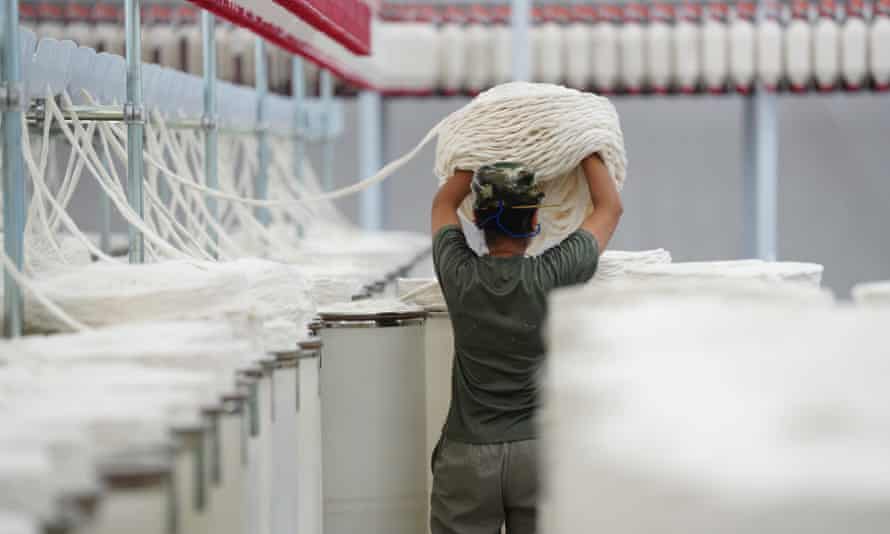
Muji confirmed that it continues to use cotton yarn from Xinjiang just denies that its cotton and yarn are connected to forced labour. "Our business partner [assures] us that the people who make our products have practiced working atmospheric condition and are treated with respect, the independent auditors take conducted on-site audit on these cotton spinning mills and accept confirmed that there is no evidence of forced labour and discrimination of ethnoreligious minorities at their facilities.
A Uniqlo spokesperson said that no Uniqlo product is manufactured in the region and insists that all production partners in its supply concatenation uphold their codes of behave on human and workers rights.
In a statement, PVH Corporation, which owns Calvin Klein and Tommy Hilfiger, said it did not source finished garments from the region and would cease all business organisation relationships with whatever factories and mills that produce garments or cloth, or use cotton fiber grown, in Xinjiang within the next 12 months.
Adidas said it does not source goods from Xinjiang and have instructed its suppliers not to source yarn from the region.
A C&A spokesperson said it did not source from whatever manufacturers or work with any fabric or yarn mills in the region.
Withal members of the coalition said that information technology was non sufficient for brands and retailers to just sever direct relationships to suppliers only that a complete overhaul of the sector's links to the region had to be undertaken.
"This isn't just nigh direct supply chain links, it's about how the global apparels sector is helping prop upwards and facilitate the organisation of human rights abuses and forced labour," says Cranston. "There needs to be a deep and thorough interrogation of how brands and retailers are linked to what is happening at calibration to the Uighur people."
Gap has been contacted for a response.
China's human rights record in Xinjiang has provoked growing international condemnation. Before this calendar month, the United states imposed sanctions on Chinese officials in protest at the treatment of the Uighur and other minority groups, including Kazakhs.
Last week the Chinese ambassador to the U.k. denied his government was committing man rights violations after videos resurfaced online appearing to bear witness shackled and blindfolded Uighur prisoners being loaded on to trains in Xinjiang.
0 Response to "Humna Rights Issues Occuring in Fashion Today"
Post a Comment